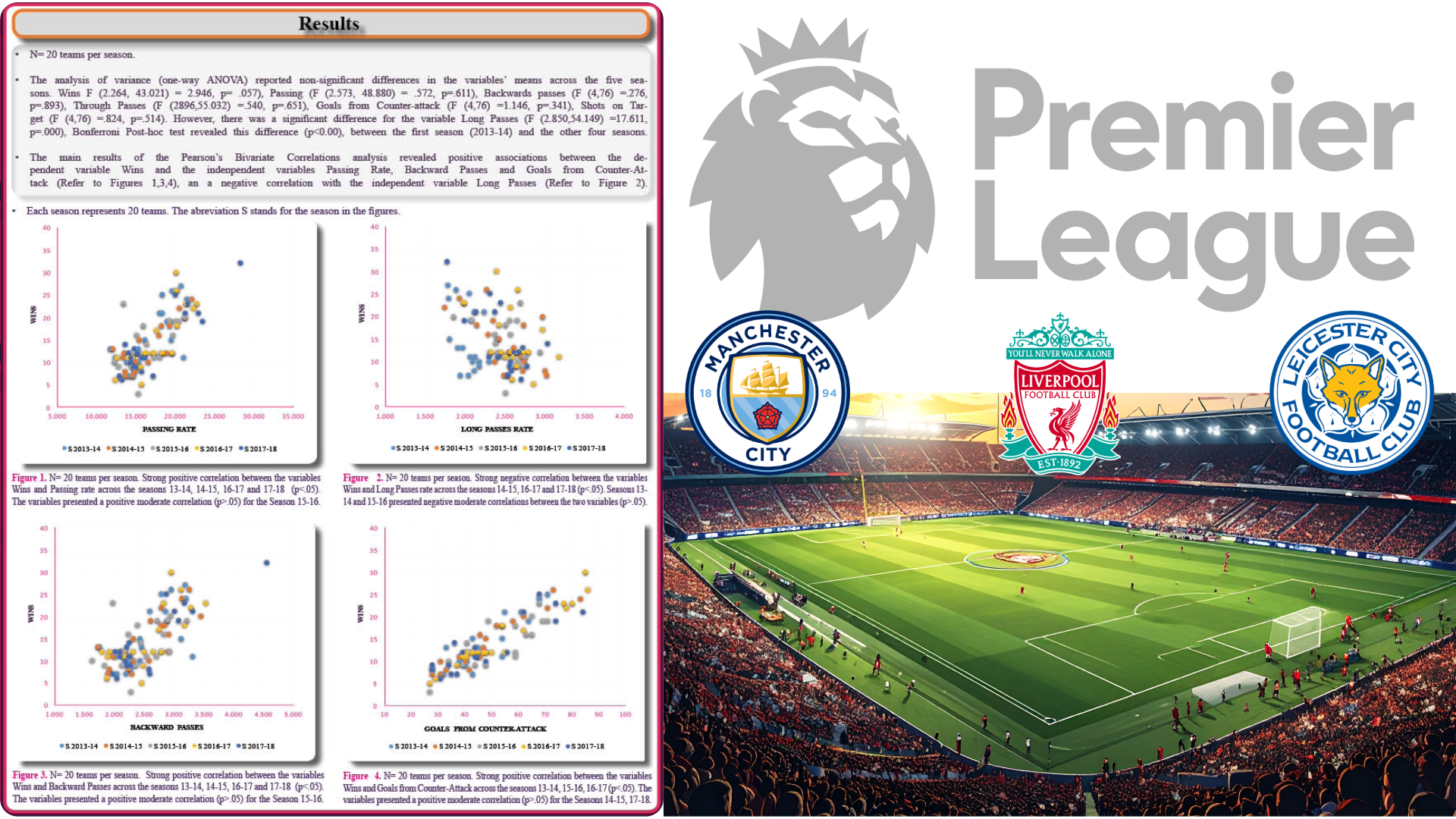


In modern football, there is a widely accepted belief that the quickest way to attack is by playing forward. However, performance analysis suggests a different reality. Some of the passes that have the greatest influence on winning matches are, surprisingly, those that move the ball away from the opponent's goal. To better understand how passing behaviours influence team performance, a study conducted in London analysed 1,900 Premier League matches across five consecutive seasons (2013–14 to 2017–18). The research examined the relationship between several attacking performance indicators—including total passing sequences, deep passes, backward passes, long passes, shots on target and counter-attacking goals—and competitive success. The findings revealed a consistent pattern. The most successful teams completed more passes, produced more deep passes, recorded more shots on target and, perhaps most surprisingly, played significantly more backward passes. In contrast, teams that relied heavily on direct play and long-ball strategies consistently achieved lower levels of success throughout the five seasons analysed. The Most Underrated Pass in Football Few actions in football are as misunderstood as the backward pass. To many supporters, it represents a lack of ambition or an interruption to attacking play. Yet the data tells a completely different story. The study identified a strong positive relationship between backward passes, deep passes, shots on target and match success. The explanation is tactical rather than conservative. Elite teams do not play backwards because they want to retreat—they do it to attack more effectively. By recycling possession, they invite pressure, manipulate the opposition's defensive structure and create new passing lanes to progress the ball. In this context, a backward pass is not a defensive action; it is a strategic tool for creating positional superiority and improving the quality of the next attack. It is no coincidence that teams such as Manchester City and FC Barcelona have built their playing identities around this principle. Possession is not an objective in itself—it is a method of controlling the opponent. Breaking Defensive Lines If backward passes help teams build attacks, deep passes are what break games open. One of the strongest findings of the research was the positive relationship between line-breaking passes and key attacking outcomes such as shots on target and victories. This highlights an important distinction: possession alone does not win football matches. What matters is how effectively possession is transformed into progression, positional advantage and high-quality scoring opportunities. The best teams do not simply circulate the ball—they move the opposition. The Decline of the Long Ball For decades, English football was strongly associated with direct play built around long passes and short passing sequences. However, the findings challenge this long-held perception. Across five Premier League seasons, long-ball patterns showed a negative relationship with victories, deep passes and shots on target. Teams that relied heavily on direct play generally created fewer attacking opportunities and achieved lower competitive success. This does not suggest that direct football cannot be successful. Under specific tactical contexts—supported by strong defensive organisation, physical dominance or exceptional efficiency from set pieces—it can produce excellent results. Nevertheless, the evidence indicates that teams capable of controlling possession intelligently and using the ball strategically are more likely to achieve sustained success over time. Effective Counter-Attacks Are Not Built on Long Balls Perhaps one of the study's most interesting findings challenges another common assumption in football. The most effective counter-attacks were not initiated through direct long passes. Instead, successful transitions typically consisted of quick combinations of short passes that exploited the defensive imbalance immediately after regaining possession. Even in moments where speed is essential, passing accuracy and coordinated movement remain the defining characteristics of successful attacking transitions. Final Thoughts The study reinforces an important message for coaches, analysts and practitioners. Winning football matches is not simply about completing more passes. It is about understanding the purpose behind every pass. The most successful teams use possession to dictate the tempo of the game, manipulate defensive structures, create positional advantages and generate higher-quality scoring opportunities. Ultimately, possession should not be viewed as the objective—it is a tactical instrument. Teams that master the strategic use of passing do not simply control the ball; they control the game, significantly increasing their chances of winning.